
Operating without leverage is better
Because it is far more transparent and avoids bad behaviors.

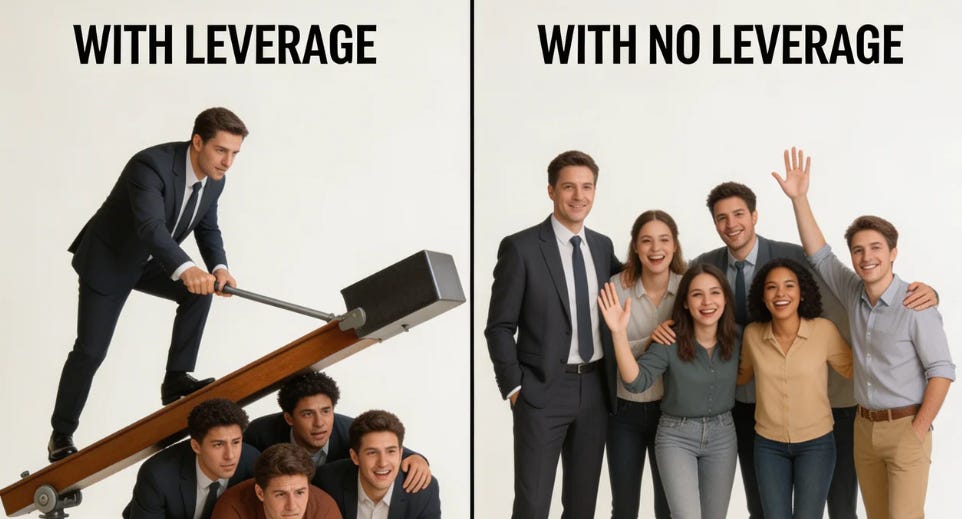
I remember in 2017 I moved to Boston to take a new job at a large ecommerce company, Wayfair.
As opposed to my previous few job changes where I knew the person who was hiring me in advance… this time I was going in cold. I didn’t know my new manager.
Plus I was moving my family (wife and 3-year old son) from Vietnam to Boston. It was a big move. We’d really liked living in Vietnam but I was having health issues and wanted to be back in the US to try to nip them in the bud.
So I left a company (Lazada) and position (Head of all operations product for the group) that I loved… and moved my family back to the US to take this new role at Wayfair.
Within the first few weeks I knew I didn’t like my manager. He essentially had the same scope I had in Lazada, but had a team that was like 10x bigger (and probably 30x more expensive). But about one third as productive.

I just saw inefficiency everywhere. It took forever to get features released because of the number of teams and interdependencies. The underlying architecture of the company was a mess and wasn’t even documented.
So to be quite honest.. I just didn’t respect or get along with my manager.
I considered that he should be reporting to me because his only redeeming skill in my mind was his loud voice and ability to play politics.
Side note that he made a big mess of Wayfair tech and I heard a new CTO was brought in that fired him and pretty much all his lieutenants a couple years later. Because Wayfair was tanking badly (back in 2019).
Anyway back to my story….
Since i’d just moved to the US I felt like this guy had massive leverage over me. I had to make this work. I’d given up everything for this move.
And that ate at me.
I vowed some years later to not let anyone have anywhere close to this type of leverage on me ever again. As I just don’t think it’s healthy.
And yet those types of highly leveraged situations probably define the vast majority of people’s careers in America. Which I think is just wrong.
I think there is a better model. In fact I’m sure of it.. because I’m using one.
And today I’m going to explain.
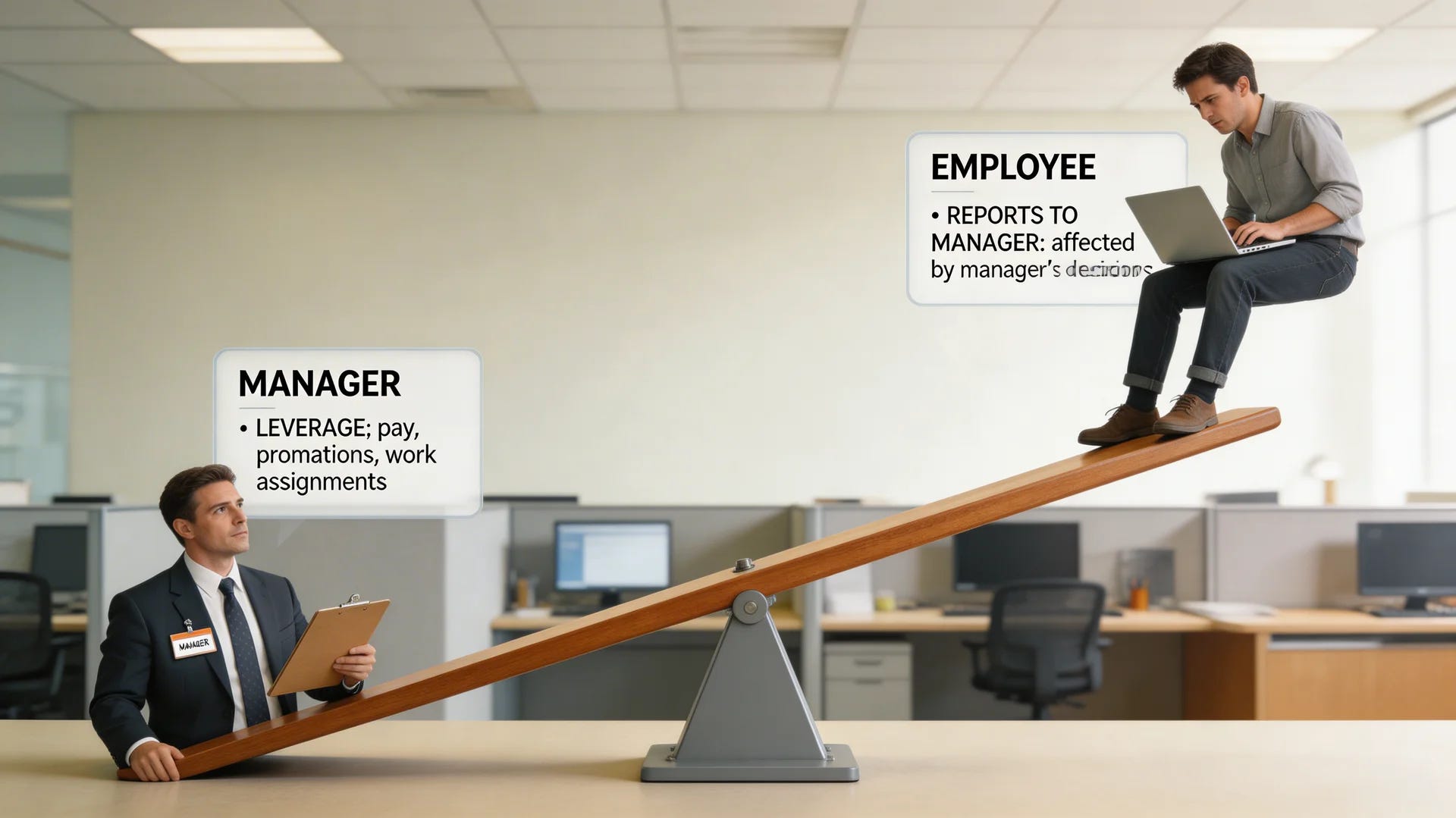
Lets first dive into what I mean by leverage
By leverage I mean that in the traditional workplace your manager basically owns you.
You earn a salary that finances your family’s expenses. If you lose that salary then unless you are financially independent… you are screwed.
Especially if you live in an expensive city like Boston and have kids.
On top of that your manager is the one that evaluates you and writes your performance review. Your success depends on his perception.
You might be very good at your job, but if he doesn’t like you… you can still get completely screwed. It happens all of the time in the corporate world most likely.
And so most people do the obvious thing… they optimise for a single thing - their boss’s perception.
It becomes less about what is the right decision or what is the best strategy… and more about what will make their boss happy? Because that is the main thing that counts in their career.
This is how the corporate world works for most people if you think about it. And you’ll hear stories of people feeling like they were screwed by it everywhere!
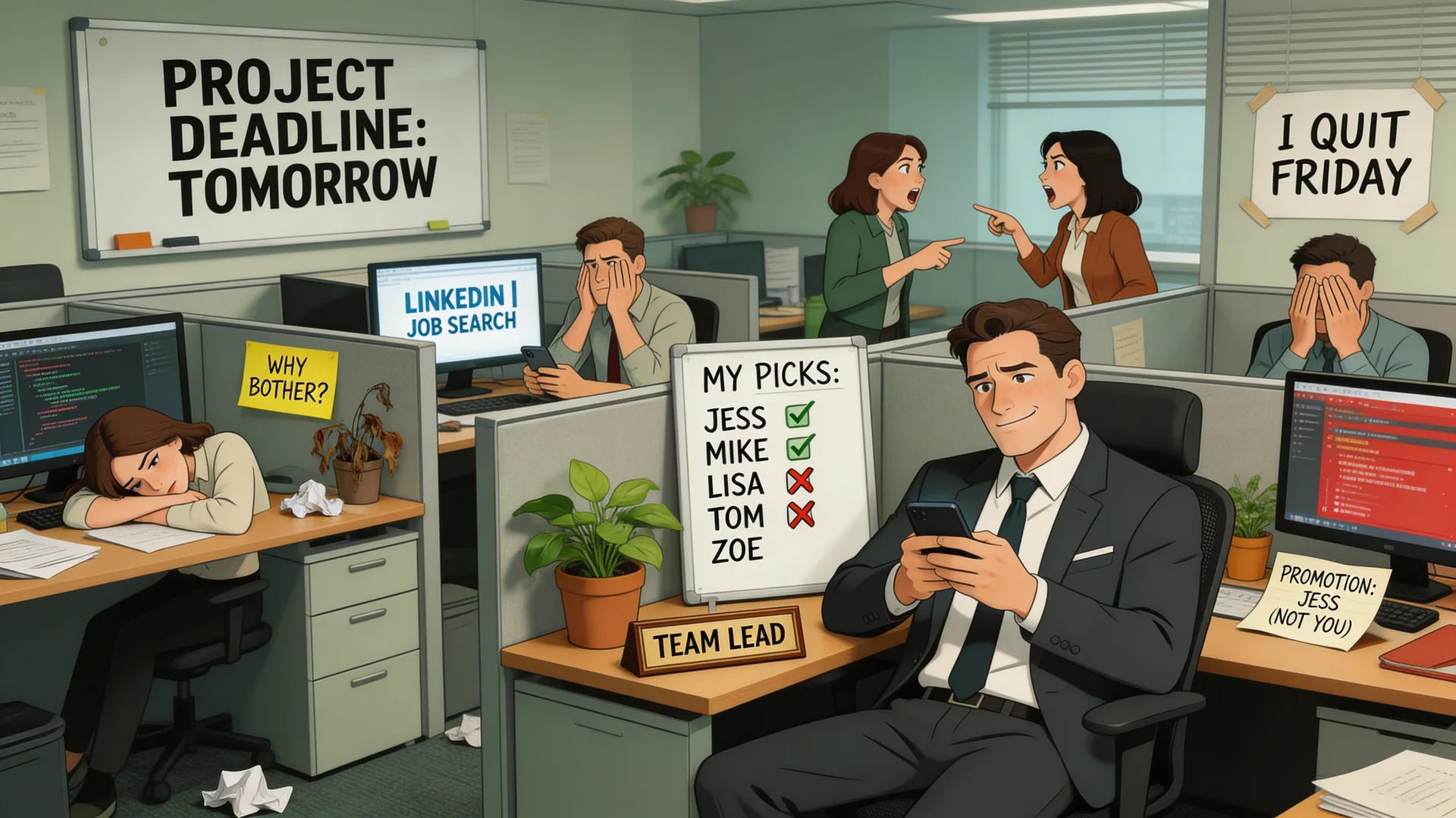
Why do I think leverage is bad?
In my view leverage is bad in certain situations and perhaps useful in others.
For example if you want to align an organization…. some amount of leverage is necessary. It cannot just be a free-for-all where everyone does what they want.
But leverage can often lead to certain behaviors in some situations.
For example a politically-oriented boss can use leverage to take credit for the work of others. Or he can use it to make good people look bad. Trust me… it happens ALL OF THE TIME.
And the negative effects typically trickle down in my experience. Everyone in the team sees how it works and they conform to the power rules.
If the boss uses leverage… they start using leverage with their own teams.
And pretty soon you have a pretty political organization with a shit ton of inefficiency.

I think there is a far better model (with low leverage)
I operate my company, Reviv, pretty much without leverage.
By this I mean that everyone is freelance. Many have other full-time or part-time jobs.
They are not reliant on me or my company for their livelihood. Most of them do not even put ‘Reviv’ on their CV or on linkedin.
I have no ‘real’ leverage on them. At most they stop working with me and so they lose their side income.
Some managers/bosses would have a problem with that. How can they get people to do what they want as quickly/easily if they don’t have leverage?
I, on the otherhand, am very happy with this situation. I do not want leverage on my team. I want them to do their work well because of other motivations. For example because:
That is the system/process and everyone else adheres to the process.
They want to do good work and they see that nobody else is taking credit for it.
They enjoy working in a highly cooperative system that is probably one of the most politics-free that they have ever been apart of.
In Reviv… if someone does a good job it is likely going to be pretty evident to everyone. Because they have lots of Clickup tasks assigned to them.. and they get them done.
Even if I didn’t like the person… I wouldn’t really be able to change that fact. If i disagreed with some of their decisions/results… i’d need to explain my logic in writing as a comment on the task.
If their logic is superior to mine it would also be transparent to everyone.
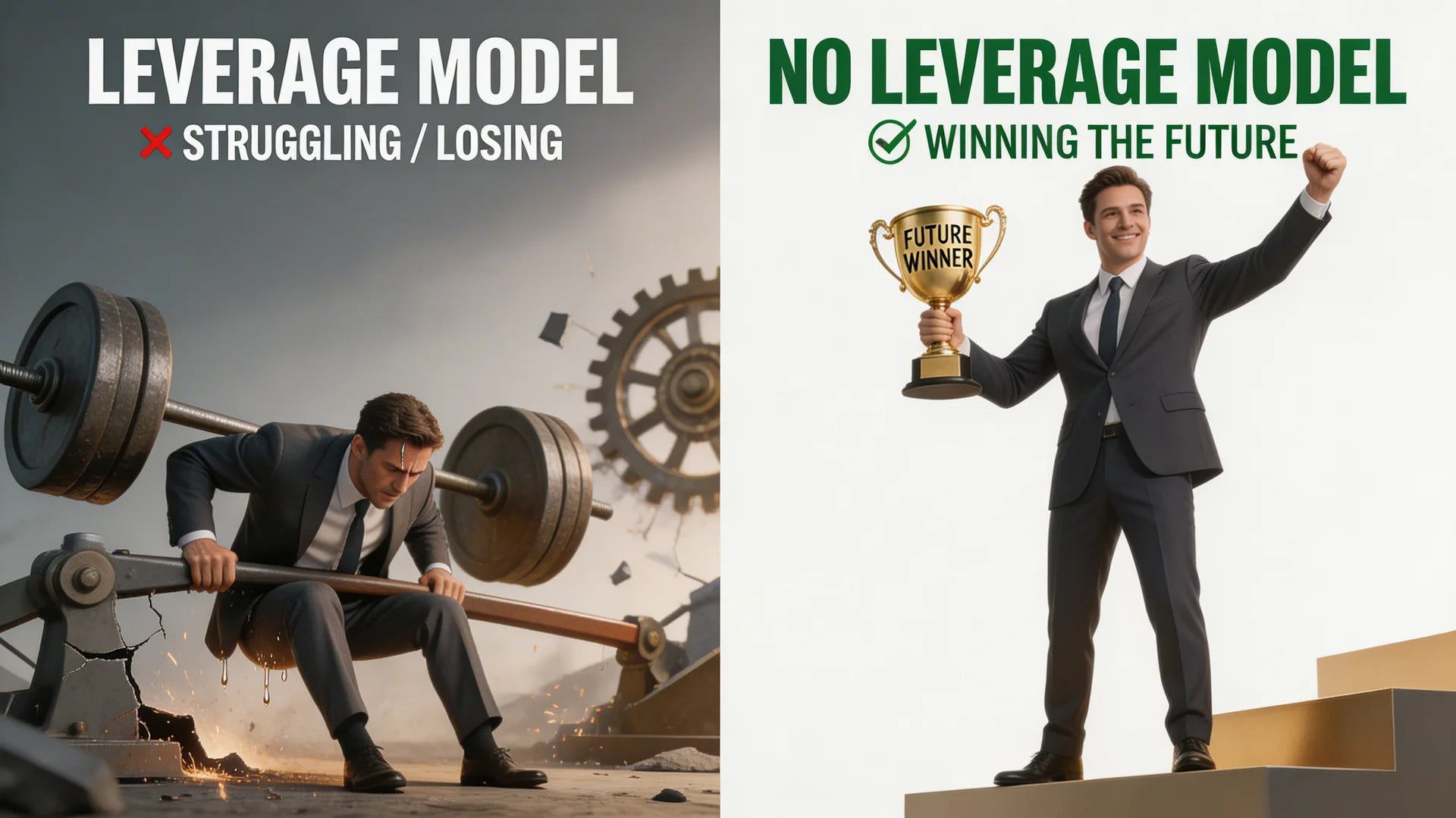
Can a leverage-free model really work at scale?
Some folks like to say to me… “Ok Ken your model works with some freelancers… but it’s not going to work for people that want to have a career and want the stability of a full-time salary.”
Which is a very valid point.
But there is a fundamental flaw in their assumption. You see.. their assumption is that this full-time employment model that has existed for the last 50+ years is going to continue to exist and thrive.
I don’t think that is going to be the case at all.
I think it’s going to be completely destroyed in this next decade. Or rather the percentage of full-time jobs will become a very small fraction of the entire white collar labor force.
Because the companies that offer that type of employment will not be competitive anymore. Companies like mine with far more agile cost and work structures will dance circles around them as we destroy them.
And the very definition of a “career” will change. People will get used to doing part-time, fractional work and working for numerous clients/employers at the same time. It will become the norm.
They will get used to the fact that their compensation will correlate very much with the value they add as opposed to just getting paid some fixed amount for the time they spent.
Being good at ‘relationships’ is going to count for less and less.
This is the future that is coming whether you like it or not.
Why I am I so confident that the future is going to look more like this?
Well… by the mere fact that I’m pretty confident i’d easily blow out pretty much any company/team i have ever worked for by working like this. It’s just far more flexible, cost efficient, scales easier, etc etc
Closing thoughts
My point today was about leverage. I think it is a very negative thing that has had massively negative consequences on people for many years.
The fact is… this model where a boss controls us like we are some kind of puppet is antiquated and it’s about to get blown up in the coming years.
What is going to replace it is going to be something far more transparent. Far more democratic and competitive.
And yes of course AI is going to play a role… but I think AI is only going to accelerate this trend that I’m talking about. Because it will force even more things to be documented in a systematic way so that the AI has access to the same information.
Gone are the days where bosses can just make arbitrary decisions based on their own relationships and preferences. AI is going to question them every step of the way.
So you see… we are moving to a world where the rules of the game are gonna play out very differently.
And i have a feeling that future is gonna look a lot more like my leverage-free model than what you see in most traditional workplaces today.
I agree and I think that institutions/organisations will most likely become smaller in the process. These vast monopolies serve themselves and not the individuals working for them. Folk are gradually waking up to this.