
Asynchronous work is gonna rule the day
Because it allows you to use a lot more people in a far more cost productive way.

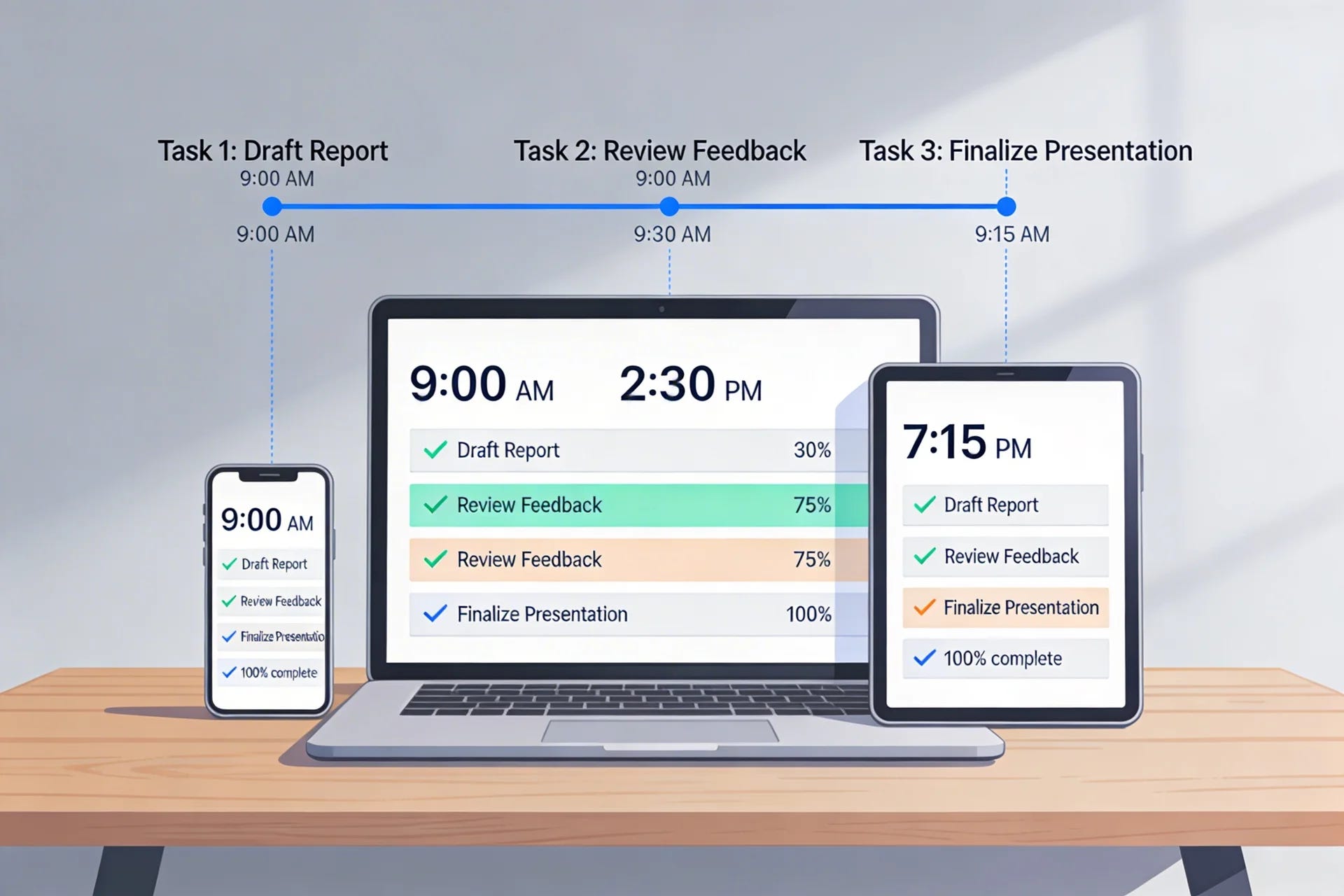
One of the biggest realizations I’ve had the past few years is the power of asynchronous work.
Back in the day it seemed like synchronous was so important. I had meetings to go to and so everyone needed to show up at the same time.
I felt like it was important to be able to speak to people and thus it was important that that we worked more or less at the same time.
But these past few years I realized that you can structure your work so that pretty much nothing needs to be synchronous.
And everything works just fine.
More than that… you will be far more efficient!
What do I mean by ‘Asynchronous’?
By this I mean that nothing in our company happens synchronously.
We have no team or 1-1 meetings. Nobody needs to work at any specific time. Everyone works according to their own schedule.
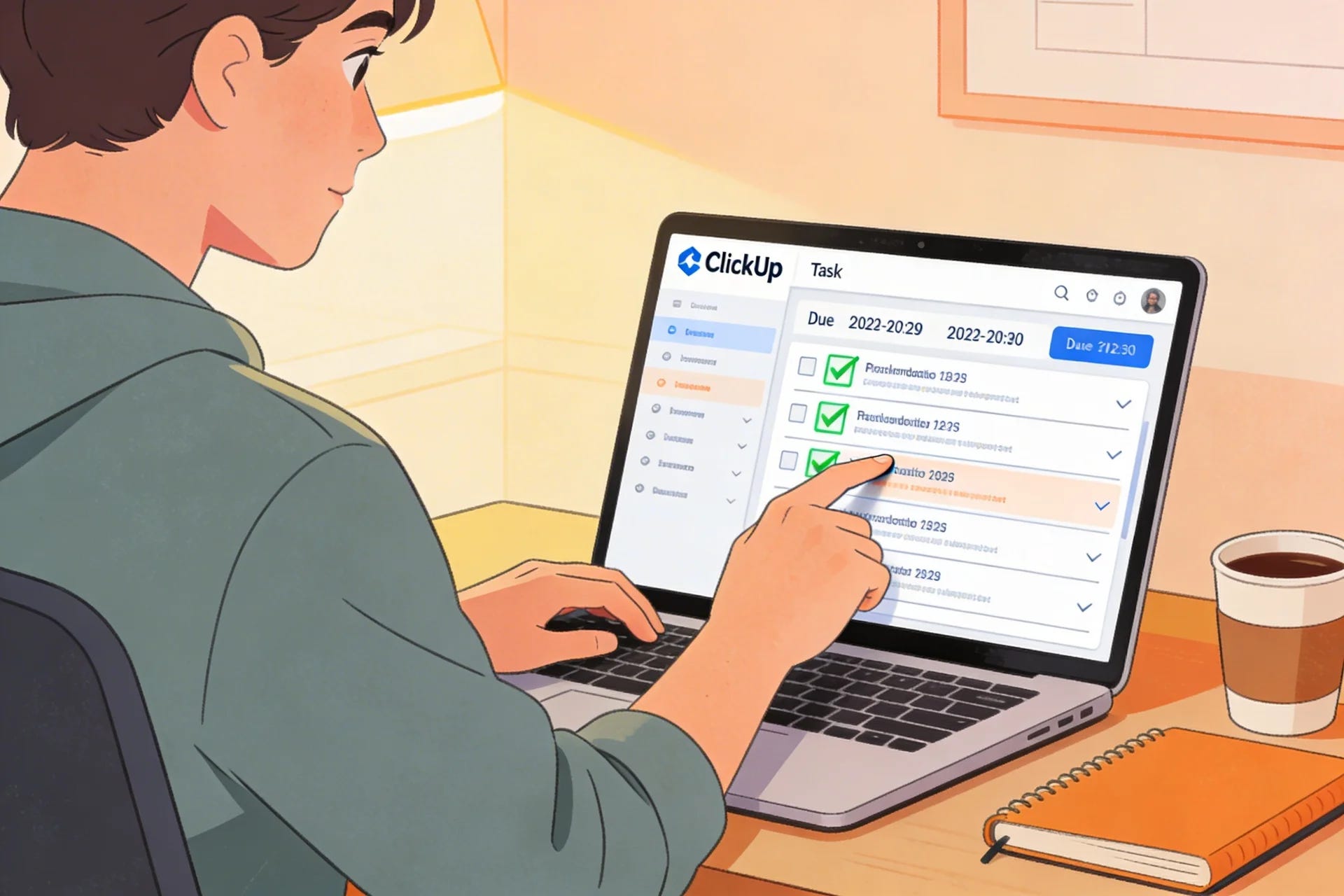
We all just do tasks in Clickup.
When we have dependencies we tag the other person in. They get a notification to their Clickup inbox the next time they check it, and they answer it.
Meanwhile the other person who is blocked doesn’t just twiddle their thumbs waiting…they work on other tasks.
And when they run out of ‘unblocked tasks’ to do.. they simply work on some other client/employer. Because all of my guys are part-time and I welcome them to work for other companies concurrently.
Asynchronous work can be queued
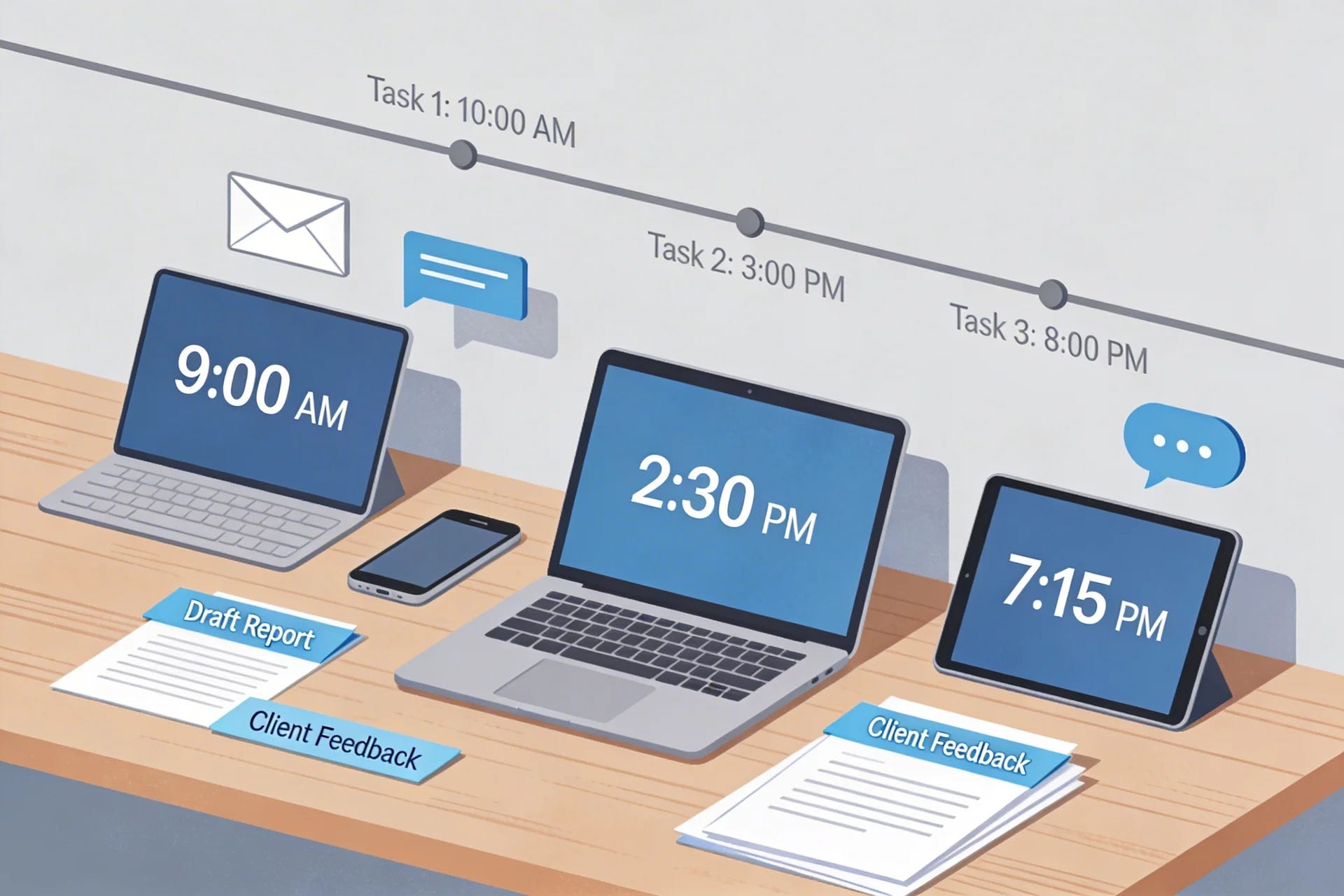
The great thing about asynch work is that it just queues up.
For me that means that I start work in the morning with a massive list of Clickup notifications in my Inbox.
I pick and choose which ones are the highest priority. Then I move to the lower priorities till I clear my inbox.
Meanwhile other team members might be progressing on other things and so fresh notifications are coming in all of the time. I’m always looking at the list and picking out the highest priorities. So that top priority tasks are always moving forward.

Contrast this with companies where they have lots of meetings. That was the case when i worked in Wayfair back in 2017.
I spent 75% of the day in meetings meaning I got very little done during that time.
Often those meetings were not about the most pressing issues… but i still had to go to the meeting.
Often team members were blocked on things they needed from me…. too bad i was still stuck in the meeting.
If you think about that work structure.. it sucks balls from an efficiency standpoint! Hahahaha
These days I’d say i’m around 90% efficiency all week long (I do have the occasional call with agencies, customers, etc.).
When i worked for traditional companies i’d say my efficiency was typically 20-25% due to meetings, etc.
We are talking about a 3-4x improvement!
People need to work for many companies in this new asynch world
So one thing about asynch work is that I find I only need people part-time.
Because I’m only working on high priority tasks with no need to keep people busy (since everyone is a freelancer that is paid by the hour for tasks they are assigned).
These folks therefore don’t rely on me for full employment and need to keep their capacity full with other work. Which pretty much my entire team does with either other full-time or part-time work.
I used to do this myself when i was contracting back in 2021 - 2024. At one point I had four different clients plus my own startup (Therapada at the time).
I was using Clickup for everything, trying to avoid most meetings, and just rotating between these five different topics each day.
The surprising thing was it didn’t burn me out at all. In fact I loved it.
I have a feeling in the future most people are gonna learn to work like this. Because their skill set is only needed at a fraction of their time by any specific company.
For example our COO/CTO at Reviv still only works about 20 hours per week and we get by just fine at a pretty decent scale. If I had to hire him full-time I’d probably come up with all kinds of lower priority projects to keep him busy.

The kings of ‘asynch’ will have a massive advantage
Now that I see how this has played out for a few years I can say confidently that I think mastering asynchronous work is gonna be critical for most companies to remain competitive.
Lets take my company, Reviv, as an example. What if some competitor came up against us and did everything the traditional way.
They would have lots of full-time employees that would only be productive a fraction of their time on high priority tasks. I, on the otherhand, would be paying only for the capacity i use.
And I could bring on many more people/specialists to scale in the way that i need while still keeping my cost base lower than their’s.
I’d be a LOT more agile and cost effective than they are.
Meanwhile their employees would likely get a bit lazy because they earn their salary regardless of how much work they do. Whereas my guys love doing more because doing more = earning more.
Closing thoughts
Asynch is about math and optimization at the end of the day.
The reality is that it is extremely hard to use a person at full capacity consistently without having them work on lower priority stuff.
And keeping people busy on lower priority stuff is a terrific way to drain a company’s resources.
It’s why i can look at managers that I used to work with in previous companies and know that I would most likely absolutely destroy them these days. Give us a given set of resources and a goal… and I will make a mockery of them.
Because i’ll hire and onboard people lightning fast. Iterate on them. All while only paying for what they do and sticking only to doing high priority tasks.
Meanwhile they’d spend months trying to find the right people. And then pay them full salaries even though only a small fraction of their time would actually be spent on high priority topics.
The founders/managers that ‘get’ what i’m saying here… are gonna be the ones that thrive in this next stage of the economy we’re evolving to. That is what I predict.